
.png)
How to Build a Snooker Practice Plan That Works
Most club players practise the same way every week. They arrive, they knock a few balls in, they play a frame or two against whoever is free, and they go home. A year later the long pots still miss and the safety exchanges still end badly. The problem is almost never talent or table time. The problem is that there was never a snooker practice plan in the first place.
A plan turns loose hours on the table into visible improvement. It tells you what you are working on, how long you spend on it, and how you will know whether it worked. This guide shows you how to build one around the time you actually have, not the time a professional has.
Why unplanned practice stops working
Unstructured practice feels productive because you are busy. Balls go in, frames get played, the time passes. But it quietly rewards the shots you are already good at and lets you avoid the ones you are not. Nobody chooses to spend forty minutes on the shot that embarrasses them.
There are three specific traps:
- Comfort bias. You repeat the routines that produce a nice feeling, so your strongest skill gets stronger and your weakest stays exactly where it is.
- No measurement. Without a score, you cannot tell a good session from a bad one, so every session feels roughly the same.
- All frames, no drills. Playing frames is a test, not training. A test tells you where you stand. It does not teach you anything new.
A written plan removes all three, because the plan decides what you work on before your mood does.
What a good snooker practice plan looks like
You do not need a coaching diploma to write one. A usable plan has four elements, and it fits on one page.
1. One clear weakness
Pick a single technical or tactical weakness for the next four to six weeks. Not five. One. It might be long potting, cue ball control off the black, safety from the baulk end, or the rest. If you cannot name it, play three frames and write down every shot that cost you position or a chance. The pattern shows up fast.
2. A measurable target
Turn the weakness into a number. Better at long pots is not a target. Pot 6 out of 10 blues from the D, three sessions in a row, is. Numbers are what let you stop guessing whether you are improving.
3. A fixed ratio of drills to frames
A reliable starting split for a club player is 70 per cent drills and 30 per cent match play. Drills build the skill. Match play checks whether the skill survives pressure. If you flip that ratio, you are testing yourself repeatedly and training yourself rarely.
4. A record
Every session gets a score, even a rough one. A notebook works. Your phone works better, because you will actually have it with you. What matters is that next week you can see last week's number.
Building the plan around the time you have
Be honest about your weekly table time. A plan built for six hours when you have two is a plan you will abandon in a fortnight.
If you get about two hours a week
Split it into two sessions of one hour rather than one long one. Spacing beats volume for skill learning. Each session: 10 minutes of straight cueing to warm up, 35 minutes on your chosen weakness, 15 minutes of match play or a solo break building routine.
If you get about four hours a week
Three sessions. Two are skill sessions built on the pattern above. The third is a longer session where you play frames against a member who is slightly better than you, then spend the last 20 minutes re-drilling whatever broke down during those frames. That final 20 minutes is where most of the improvement actually happens.
If you get six hours or more
Add a dedicated safety session. Club players who practise at all almost never practise safety, which is why a player with a modest break can still climb the club rankings by making opponents play from awkward places. Spend a full hour on shots to nothing, containing safety, and escapes from snookers.
How to run a single session
The structure below works whether you have 45 minutes or two hours. Scale the blocks, keep the order.
- Warm up (10 to 15 per cent). Straight cueing up and down the spots. No scoring, no judgement. You are waking up the cue action, not proving anything.
- Skill block (50 to 60 per cent). Your chosen weakness, using a routine with a score attached. Reset properly between attempts. Sloppy resets make the score meaningless.
- Pressure block (20 per cent). Repeat one routine from the skill block, but give it a consequence. If you miss, you restart from zero. This is the part that transfers to matches.
- Match play or break building (15 to 20 per cent). Finish on something enjoyable, so you come back.
If you need routines to fill the skill block, our list of 27 best snooker practice routines covers potting, straight cueing, safety, and break building, with easy, medium, and hard versions of each so you can raise the difficulty as your scores improve.
Measure the plan or it is just a wish
Scoring your drills tells you whether your technique is improving. Tracking your matches tells you whether that improvement is reaching the table when it counts. You want both, because they can move in opposite directions for months before they line up.
Logging results in the CuePal app takes a few seconds after each frame, and every match you record moves your CuePal Global Rating up or down, so you can see at a glance whether your form is genuinely trending in the right direction or whether one good night flattered you.
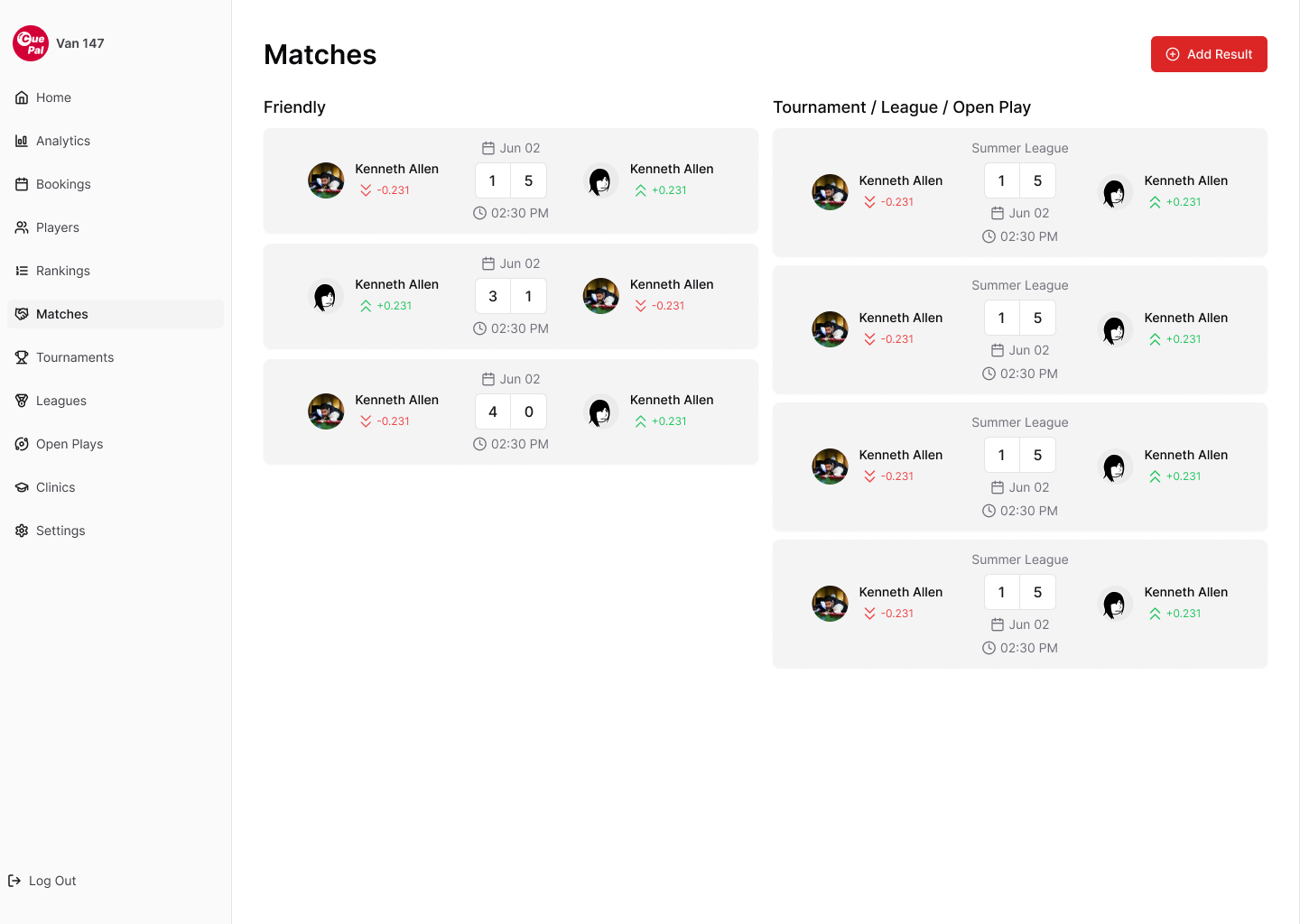
The rating matters more than it first appears. A run of narrow losses against strong opponents and a run of comfortable wins against weaker ones can produce the same win percentage while meaning completely different things. A rating separates them. It also settles the club argument about who is actually playing well this season, because it uses verified results rather than memory.
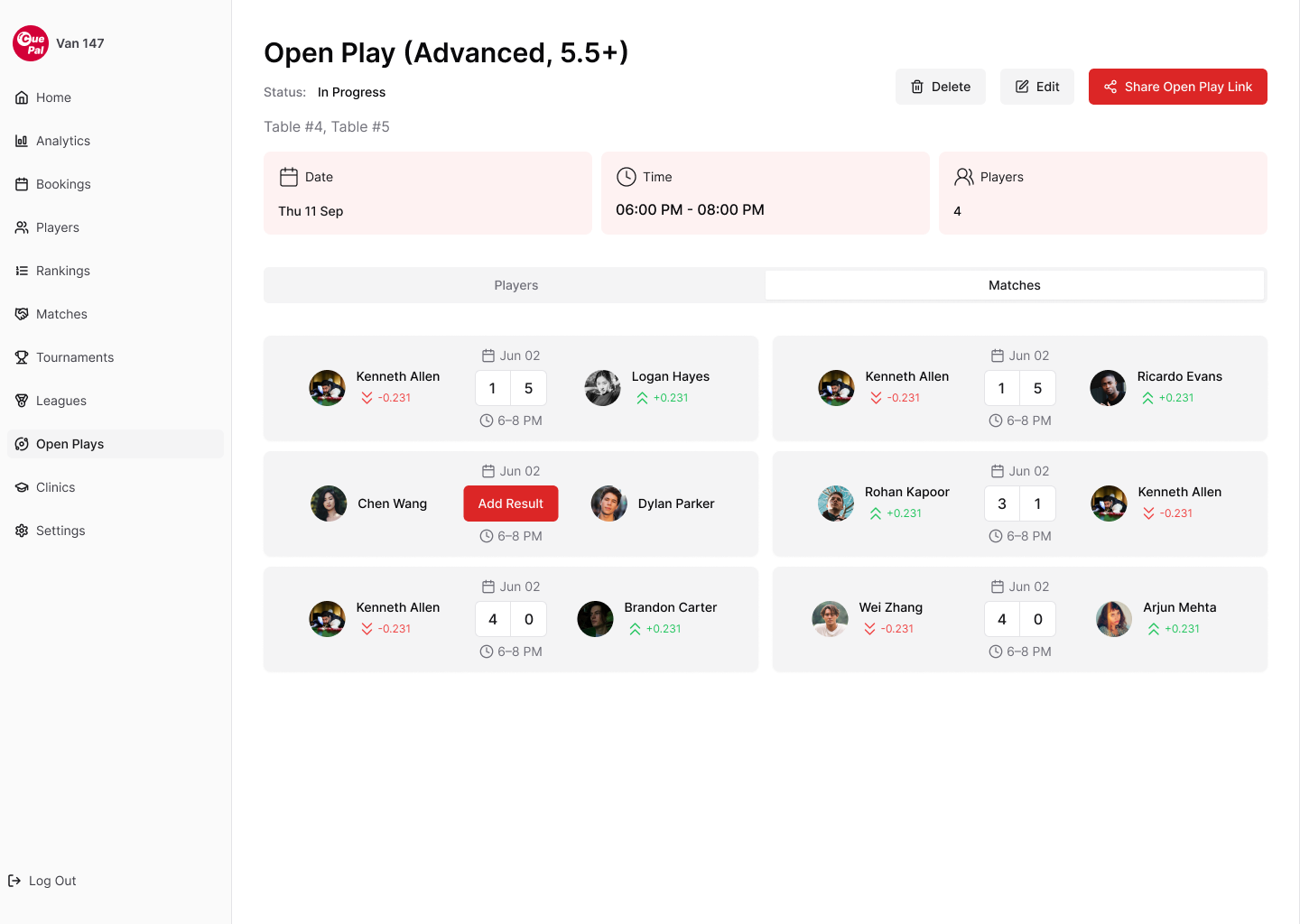
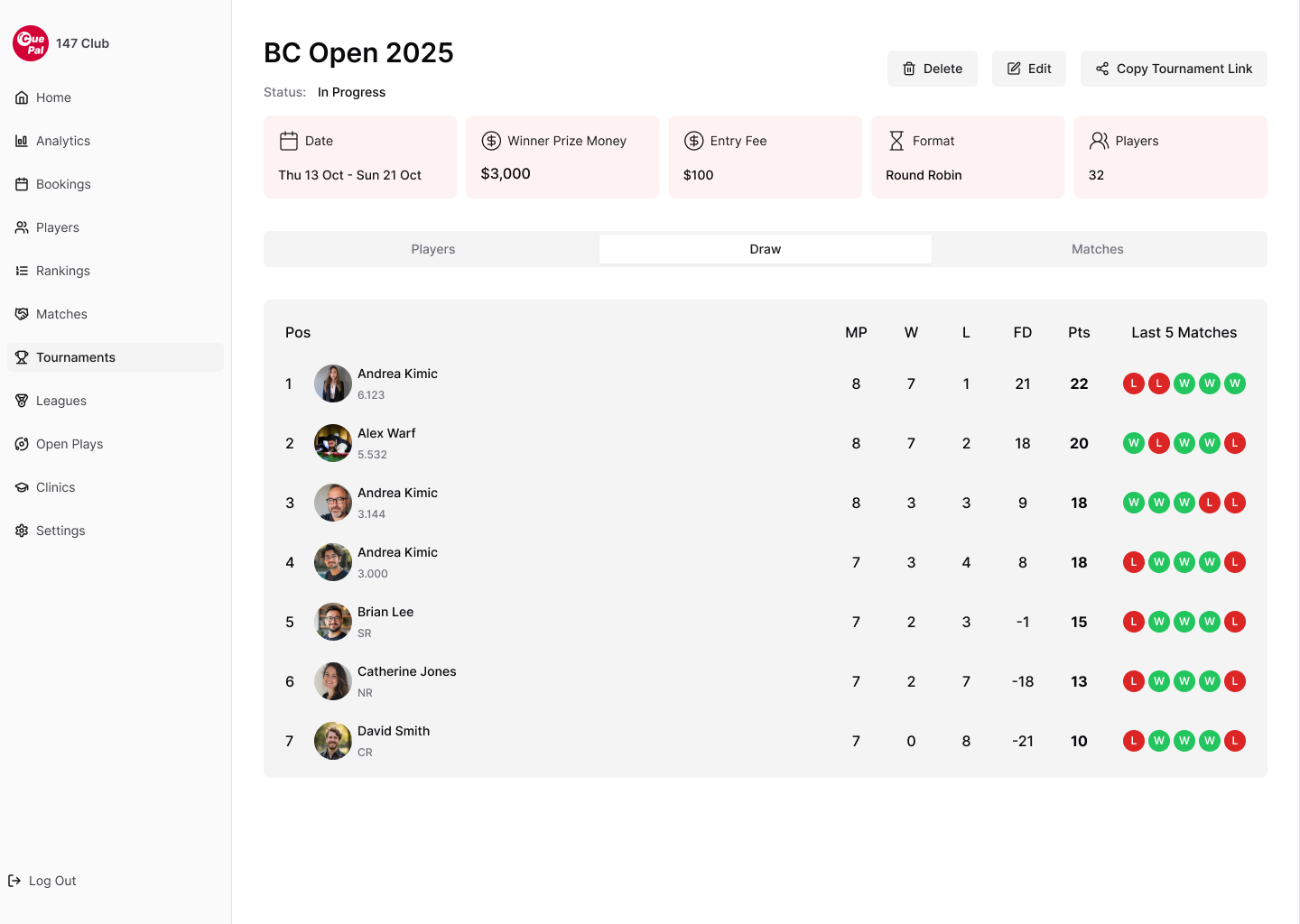
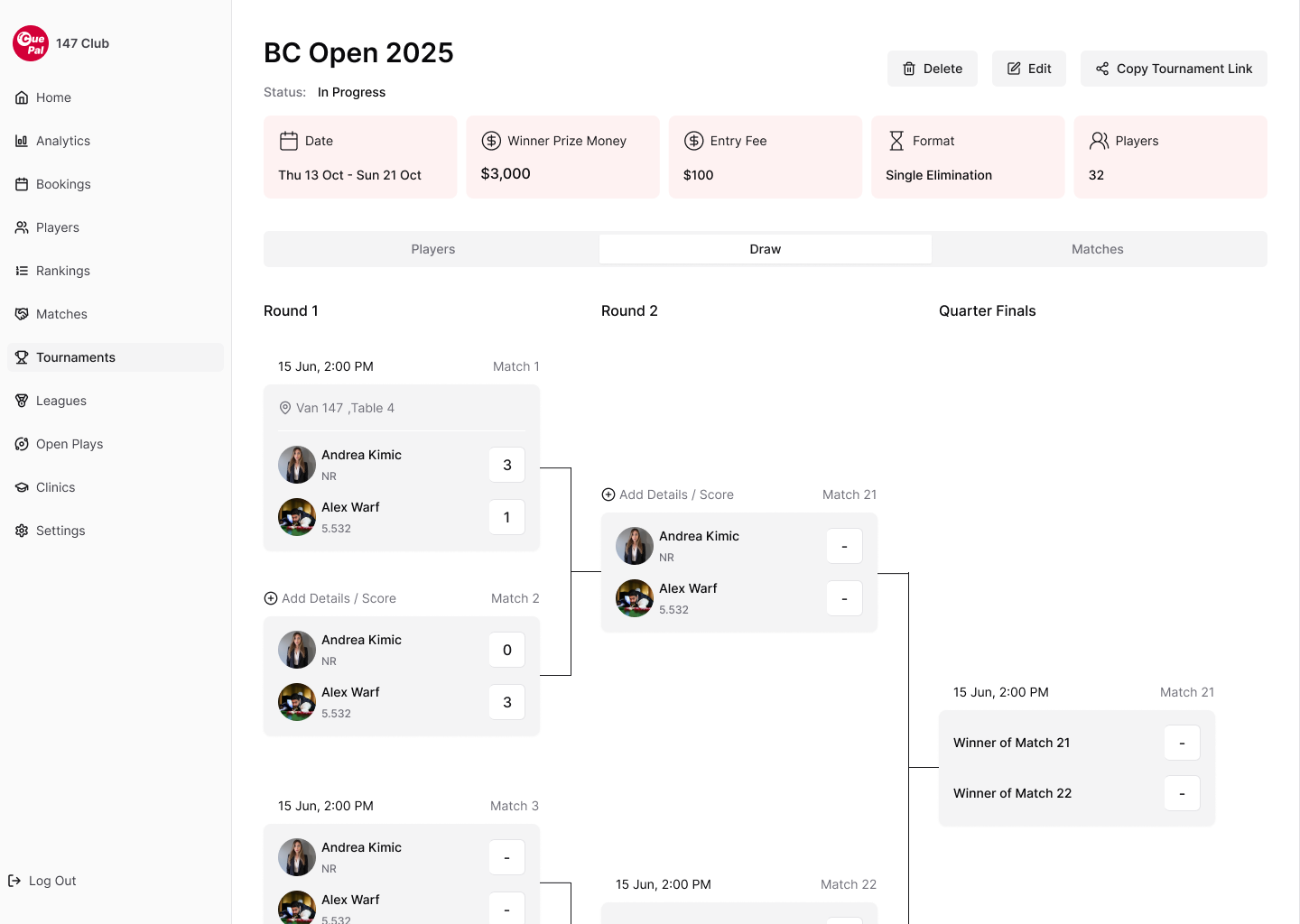
If your club runs its leagues, tournaments, and open play sessions on CuePal club management software, every competitive frame you play is recorded automatically and feeds straight into your rating and the club rankings. There is nothing extra for you to do beyond turning up and playing.
Five mistakes that quietly ruin practice plans
- Changing the plan every week. Skills need repetition to stick. Give a plan at least four weeks before you judge it.
- Practising only when you feel good. The sessions you do not feel like doing are the ones that separate you from the player who only practises in March.
- Working on three weaknesses at once. Progress on all three will be too slow to notice, so you will conclude that practice does not work.
- Never raising the difficulty. If you are scoring 9 out of 10 on a routine, it has stopped teaching you. Move the balls, lengthen the shot, or shrink the target zone.
- Ignoring the mental side. Add a pressure block, play in club competitions, and get used to the feeling of a shot that matters. Technique that only works in an empty room is not technique you own.
Start this week
Write down one weakness, one number that would prove it has improved, and the two or three slots in your week when you can get to a table. That is a complete snooker practice plan. It will beat an unwritten intention every single time.
Then give it something to push against. Enter the next club competition, play in an open play session, and record the results so the improvement is visible rather than imagined. If your club is not yet running its events and rankings in CuePal, send your club owner to clubs.cuepal.co and they can set the club up in a few minutes.
Similar Articles
Join The Biggest Snooker Community
Discover events, meet players, and level up your game.