
.png)
Pool Position Play Drills to Run More Racks
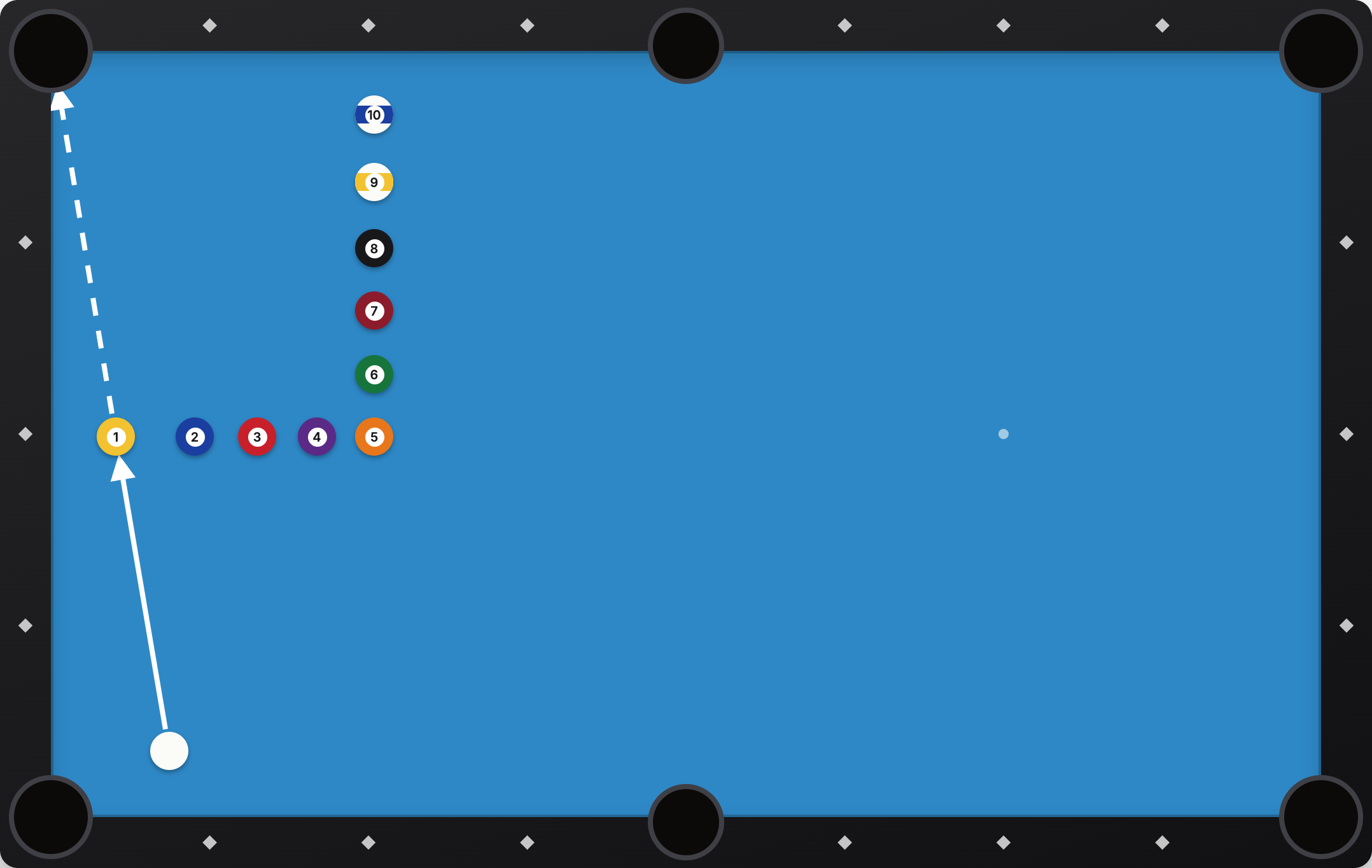
Most pool players lose racks they already had. The ball goes in, the cue ball drifts three inches too far, and suddenly the next shot is a thin cut down the rail instead of a tap in. That gap between potting well and winning is almost always shape, which is why pool position play drills are the fastest way to add frames to your game without changing anything about your potting stroke.
This is a practice guide for pool players, whether you spend your evenings on 8 ball, 9 ball or 10 ball. The drills below are deliberately simple to set up, because the ones you actually repeat are the ones that work. You need a table, a full set of balls, and about forty minutes.
Why position play decides more racks than potting does
Think about the last rack you lost. There is a good chance you potted four or five balls cleanly and then ran out of position, took on a low percentage shot, and handed the table over. Potting is a skill with a fairly low ceiling for improvement once you are a decent club player. Shape is where the room is.
The reason is compounding. A slightly loose position on ball one makes ball two harder, which makes your cue ball control on ball two less precise, which makes ball three harder again. By the middle of the rack you are firefighting. Good players are not potting harder shots than you. They are potting easier ones, over and over, because they set them up two shots in advance.
Three ideas underpin everything below:
- Landing zones, not landing spots. Aiming for a dot on the cloth is a recipe for frustration. Aim for an area roughly the size of a beer mat, then shrink it as you improve.
- Angle before distance. Being on the correct side of the object ball matters far more than being the perfect distance from it. A half ball angle at four feet beats a dead straight shot at one foot nine times out of ten.
- Speed is the main control. Club players reach for spin when pace would do the job. Learn what your natural rolling speed does first, then add side.
Five pool position play drills that build real cue ball control
Work through these in order. Each one isolates a single part of position play, and the last two put the pieces back together under something close to match conditions.
1. The three ball shape ladder
Place three object balls in the middle of the table, roughly two feet apart, and a cue ball anywhere. Your job is to pot all three in order while leaving a clear, angled shot on the next one every time. Do not worry about which pocket you use.
Score it honestly. Three points if you pot and leave a comfortable angle, one point if you pot but end up straight or awkward, zero if you miss or get snookered behind nothing. Run the ladder ten times and keep the total. A score above twenty means you are ready to make the gaps smaller.
2. Stop, follow and draw on the same shot
Set a single object ball a foot off the side cushion with the cue ball three feet away at a slight angle. Pot it three times in a row: once with a stop shot, once following through to a marked area up table, once drawing back to a marked area down table. Same shot, three different outcomes.
This is the most boring drill on the list and the most valuable. Almost every position problem in 8 ball comes down to not being able to choose which side of the object ball your cue ball ends up on. Ten minutes of this per session is enough.
3. The ghost with a shape target
Standard ghost practice has you break, take ball in hand, and try to run out. The variant worth your time adds one rule: before each shot, call out loud where you want the cue ball to finish. Not vaguely, but specifically, naming the area.
Calling shape forces you to have a plan rather than hitting and hoping. You will be wrong a lot at first, and that is the point. The gap between where you said the cue ball would go and where it actually went is the exact thing you are trying to close.
4. One rail and two rail landing zones
Put a cue ball on the spot and chalk out a target area about a foot square near the bottom cushion. Now get there off one cushion, five times. Then off two cushions, five times. Then move the target and repeat.
Heyball players should spend extra time here. On a Chinese 8 ball table the pockets are tighter and the cushions behave differently from a standard pool table, so cue ball routes that feel natural on one table will let you down on the other. If your club has both, run this drill on each and note the difference.
5. Work the rack backwards from the key ball
Lay out a simple six ball rack. Before you take a single shot, decide which ball is your key ball, the one that gets you onto the black or the 9. Then work backwards: what gets you on the key ball, and what gets you on that.
Play the rack out and compare what happened with your plan. Most players discover their plan was fine and their execution drifted by shot three. That is useful information, because it tells you to practise drill two rather than reading more about patterns.
How to structure a practice session so it sticks
Forty minutes of focused work beats three hours of knocking balls about. A session that actually changes your game looks something like this:
- Five minutes warming up. Long straight pots, no scoring, just finding your stroke.
- Fifteen minutes on one weakness. Pick a single drill from above and stay with it. Do not rotate through all five every session.
- Fifteen minutes of applied play. Ghost racks or the key ball drill, where the pressure of running out is present.
- Five minutes recording what happened. Scores, what went wrong, what you will work on next time.
That last five minutes is the one everybody skips, and it is the one that separates practice from exercise. Without a record you will convince yourself you are improving when you are simply having a good day, or that you are terrible when you are having a bad one.
Track whether the drills are actually working
Drill scores tell you about your practice. Results tell you about your game. You want both, because it is entirely possible to get better at a drill and no better at winning.
Logging your matches at the club gives you the second half of that picture. If your position play is genuinely improving, you should see it in frames won against players you used to lose to, not just in a rising ladder score at the practice table.
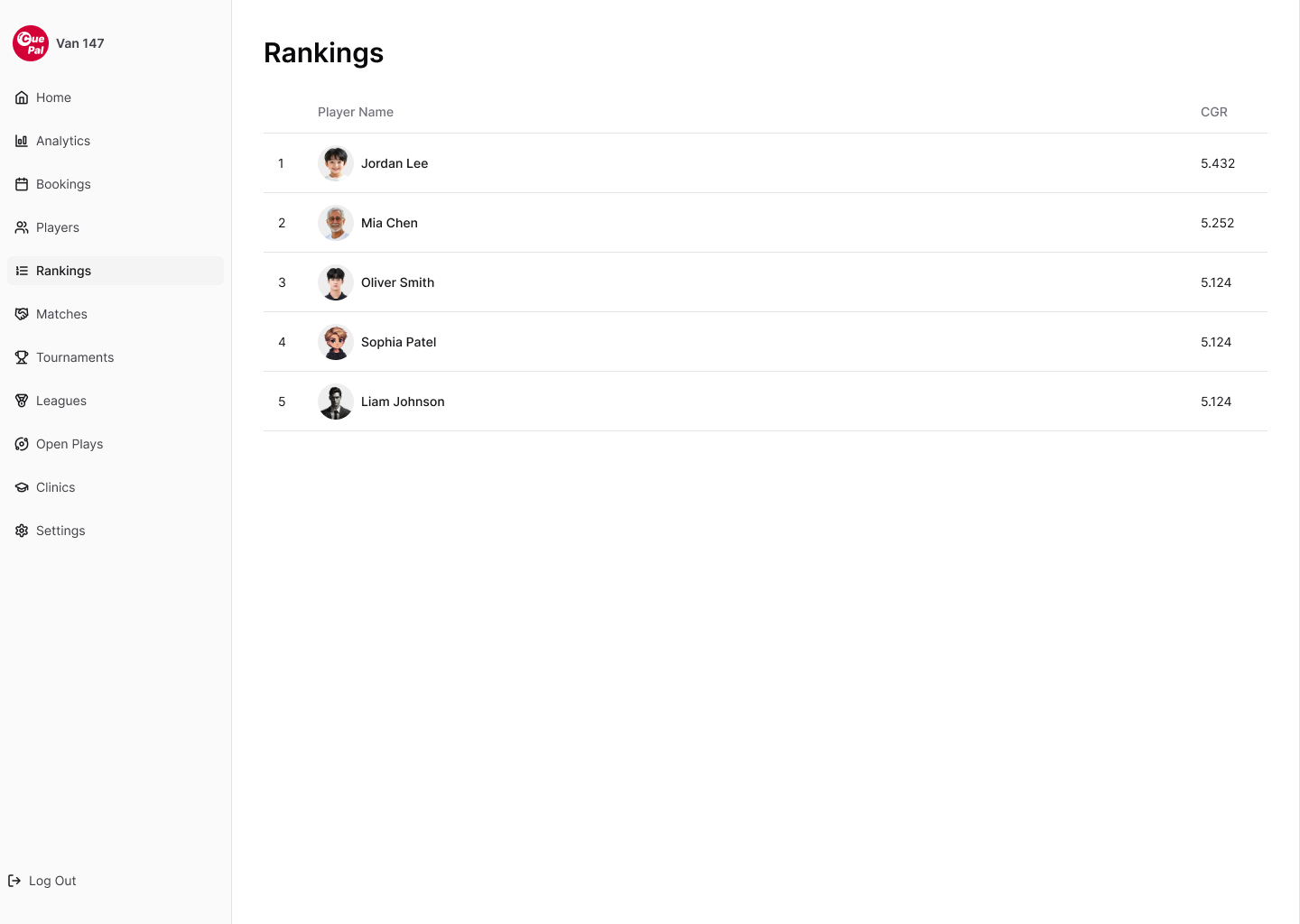
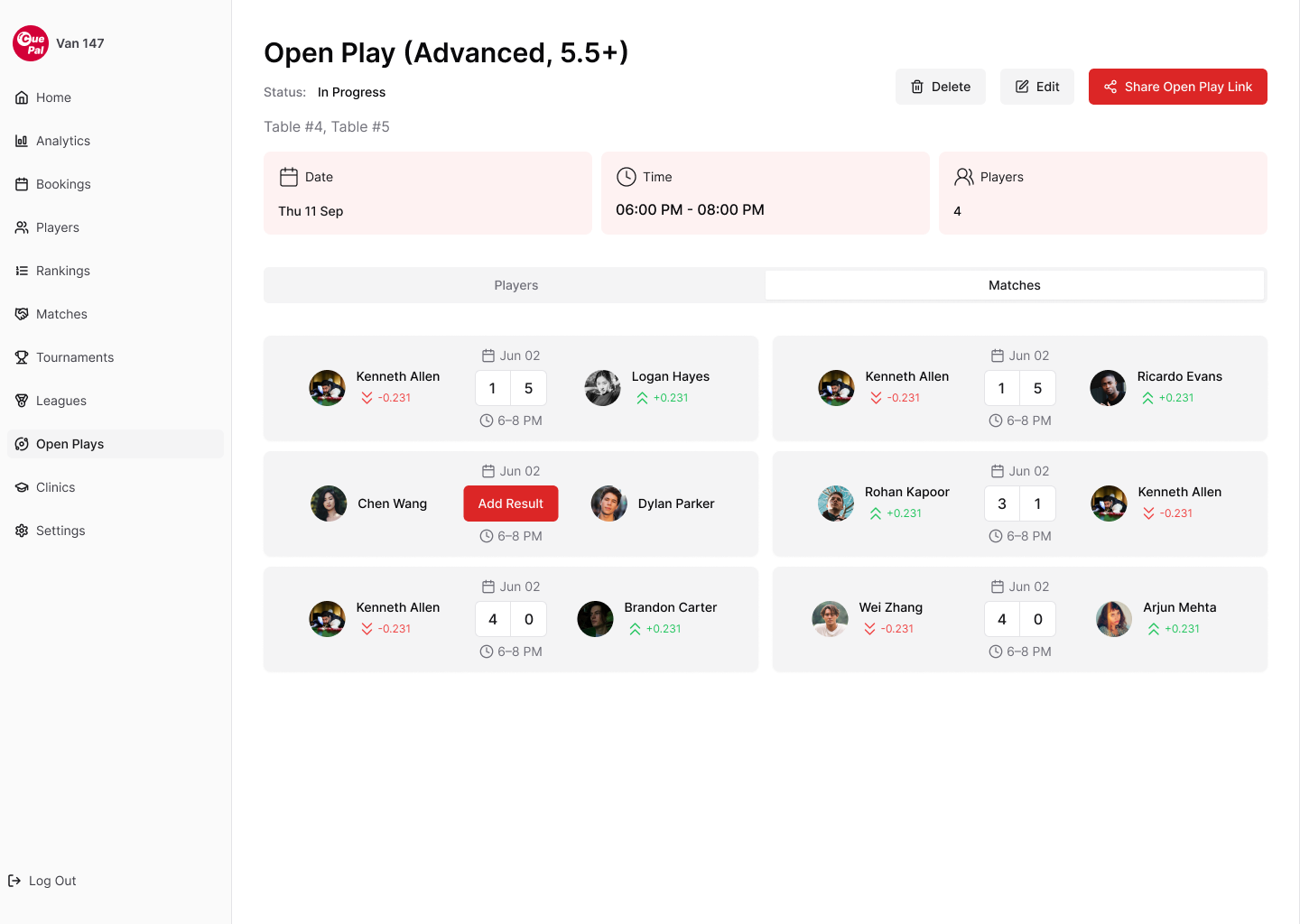
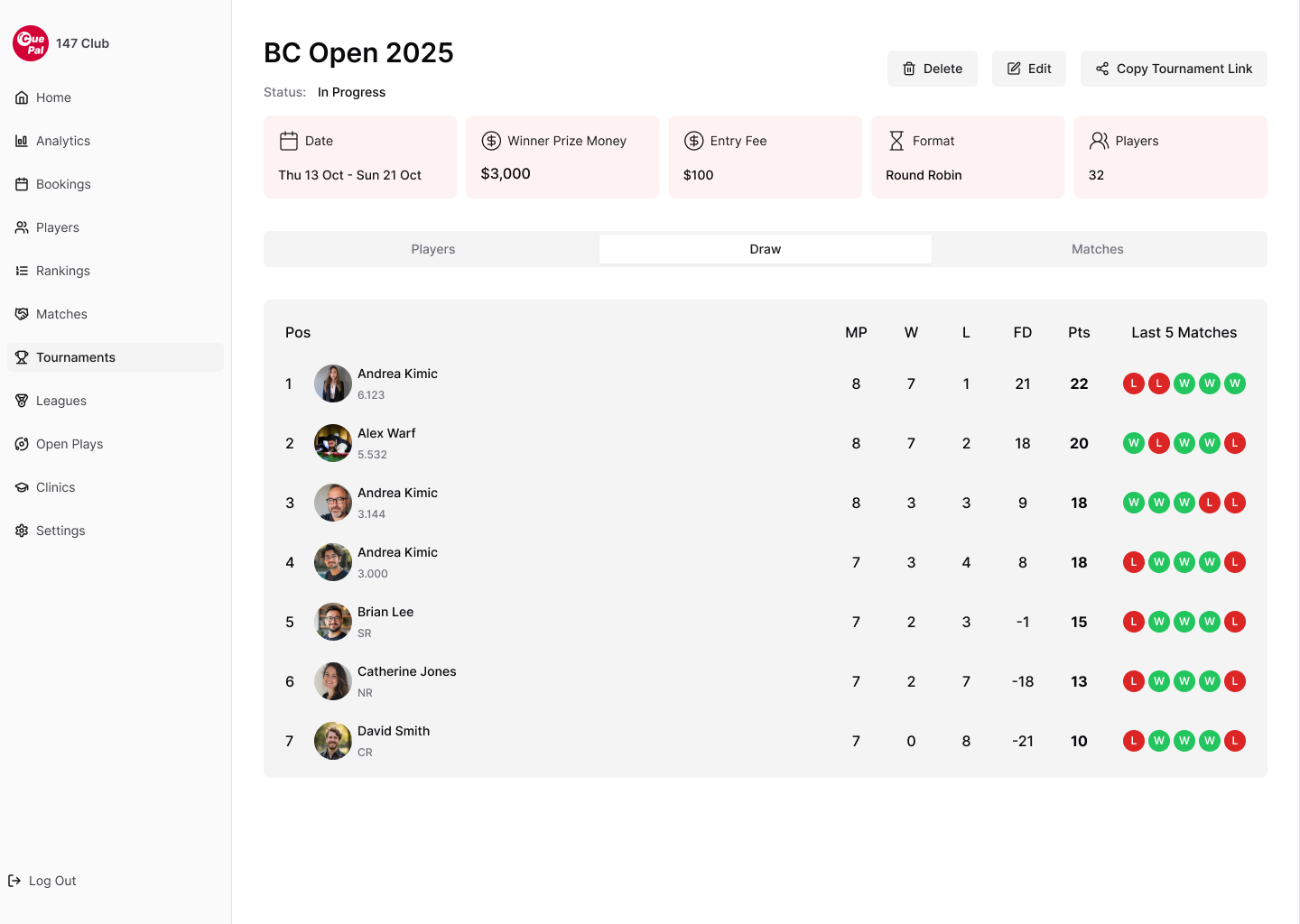
If your club runs on CuePal club management software, results from leagues, tournaments and open play sessions are recorded as they happen, so you get an honest record without keeping a notebook yourself. Friendly frames count too, which matters when most of your table time is casual.
Take it into club play
Drills are a controlled environment. Club play is not, and the transfer is rarely automatic. Two things close that gap quickly.
The first is playing people who are better than you, regularly and without excuses. A weekly league frame against someone who punishes loose shape will teach you more than a month of solo practice. The second is the scoreboard. Knowing that a frame counts towards a rating changes how carefully you think about the shot after the one in front of you, which is exactly the habit the drills are meant to build.
Clubs that run ranked play tend to produce players who improve faster, because every frame has a small consequence attached. That is as true in a pool hall or a heyball venue as it is anywhere else.
Start with one drill, not five
The temptation after reading a list like this is to try everything on Tuesday and nothing by Friday. Resist it. Pick the drill that targets your most obvious weakness, commit to it for three sessions, and only then add a second one.
Position play improves slowly and then all at once. You grind through weeks where nothing seems to change, and then one evening you notice you are not stretching for awkward shots any more, because you stopped creating them two shots earlier.
If you want your frames counted and your progress tracked, CuePal records results from your club and turns them into a rating you can follow. Ask your club to set up a venue at clubs.cuepal.co, or point an owner towards a demo if they want to see how it works before committing.
Similar Articles
Join The Biggest Snooker Community
Discover events, meet players, and level up your game.