
.png)
How to Run a Snooker League at Your Club
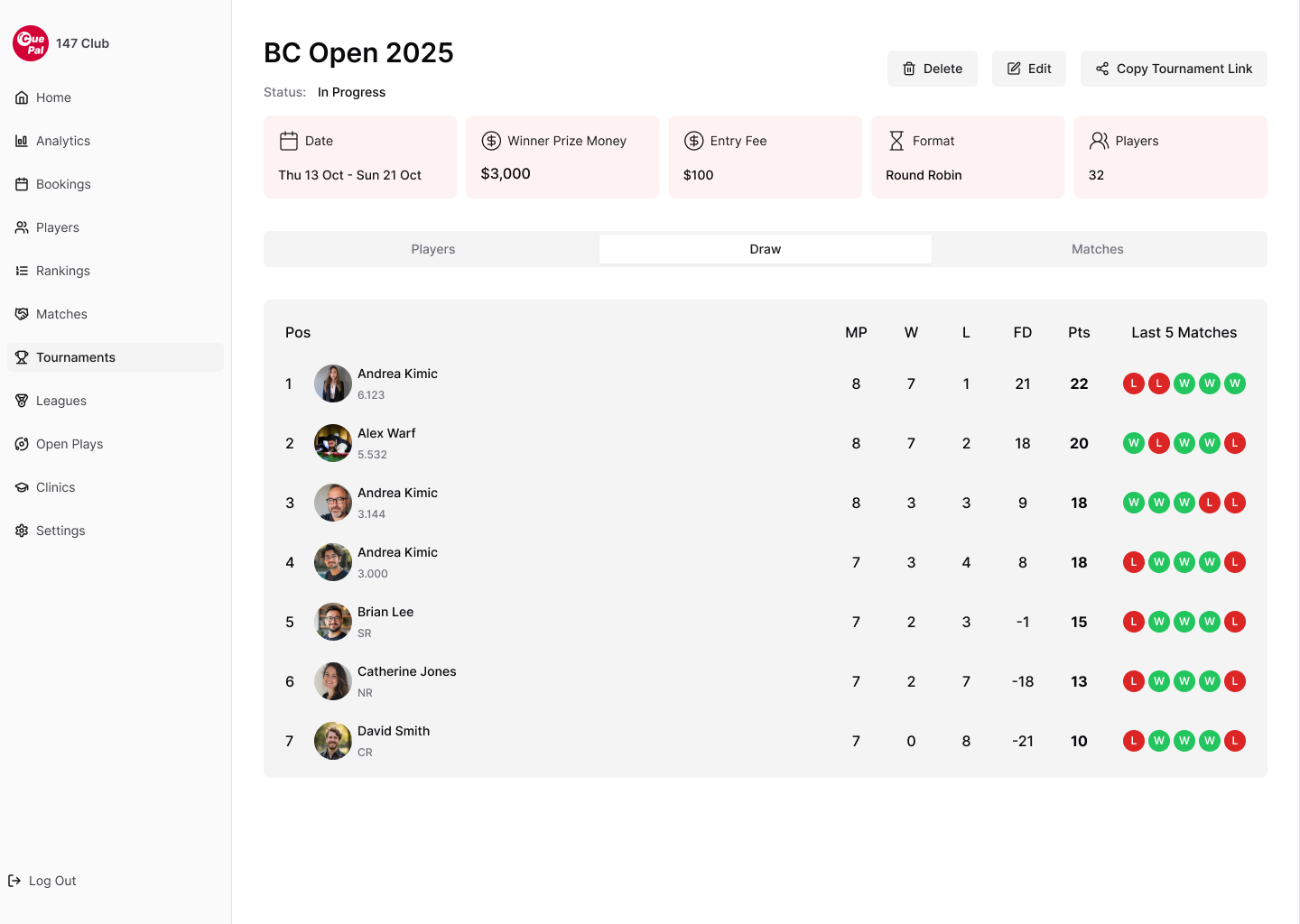
A one night tournament fills your tables for an evening. A league fills them for a whole season. If you want to run a snooker league that keeps members coming back week after week, you need more than a fixture list pinned to the notice board. You need a clear format, fair rules and a way to keep results and standings up to date without living in a spreadsheet.
This guide covers how to design a club league, build a fixture schedule that works, keep the table accurate and turn a single season into a long term habit for your members.
Why every club should run a league
Leagues are the backbone of a healthy club. Unlike a knockout, nobody goes home after one bad frame, so every player gets regular, meaningful matches over several weeks or months.
- Predictable table usage: league nights give you a reliable busy evening every week.
- Stronger retention: members with a fixture on the calendar have a reason to keep showing up and to keep their membership active.
- Community: players get to know opponents they might never have met on a casual night.
- Visible progress: a standings table gives players a clear goal, whether that is winning the title or climbing a few places.
Leagues are one of the most effective engagement tools a club has, and they fit neatly into the wider plan we describe in the 4 pillars of growth for billiard and snooker clubs.
Designing your league format
Before you open entries, settle the structure. The right format depends on how many players you expect, how many tables you can give up and how long you want the season to last.
Singles or teams
Singles leagues are the simplest to organise and work well for most clubs. Team leagues add a social element and suit clubs with a strong core of regulars, but they need captains, team sheets and more rules around substitutes.
Single or double round robin
Most leagues use a round robin, where every player meets every other player. In a double round robin they meet twice. The numbers add up quickly:
- 10 players, single round robin: 45 matches over 9 rounds.
- 10 players, double round robin: 90 matches over 18 rounds.
If your field is large, split it into divisions of 8 to 10 players by ability. This keeps matches competitive and the season a manageable length.
Match length and scoring
Decide how many frames each fixture includes and how points are awarded. Common options are:
- Points per frame: every frame won counts, which rewards consistency.
- Points per match: for example, 2 points for a win and 0 for a loss, with frame difference as a tie breaker.
- Handicaps: useful when abilities vary widely within one division.
Whatever you choose, publish the tie break order before the season starts: head to head, then frame difference, then frames won is a common approach.
Building a fixture schedule that actually works
The fixture list is where most league organisers lose hours. A good schedule balances table availability, player commitments and a fair spread of opponents.
Fixed nights versus flexible windows
A fixed league night is easy to manage and creates a great atmosphere. A flexible window, where players arrange their match within a week, suits members with busy schedules but needs clear deadlines to stop fixtures piling up.
Plan for the awkward bits
- Odd numbers: one player will have a bye each round, so make sure byes are spread evenly.
- Postponements: set a firm rule on how late a match can be played.
- Withdrawals: decide in advance whether results against a withdrawn player stand or are removed.
- Holidays: leave gap weeks in the calendar rather than squeezing the season.
Keeping results and standings accurate
A league lives or dies on trust. If players doubt the table, they lose interest. Accurate, fast updates matter more than anything else.
- Record results on the night: both players should confirm the score before they leave.
- Update the table immediately: a standings table that is a week out of date kills momentum.
- Make it visible: players should be able to check their position and upcoming matches at any time.
Results from league matches also feed into a fair picture of player strength over time. If you are thinking about rankings as well, read our guide to live snooker rankings for amateurs.
The problem with spreadsheets and group chats
Many clubs start their first league with a spreadsheet and a messaging group. It works for a few weeks, then the cracks appear:
- Fixture lists that have to be rebuilt by hand when someone drops out.
- Results sent by message and never added to the sheet.
- Standings with formula errors nobody notices until the final week.
- Endless questions about who plays whom and when.
- Entry fees chased in cash across the season.
The organiser ends up as an unpaid administrator, and the league quietly fades after one season.
How software helps you run a snooker league
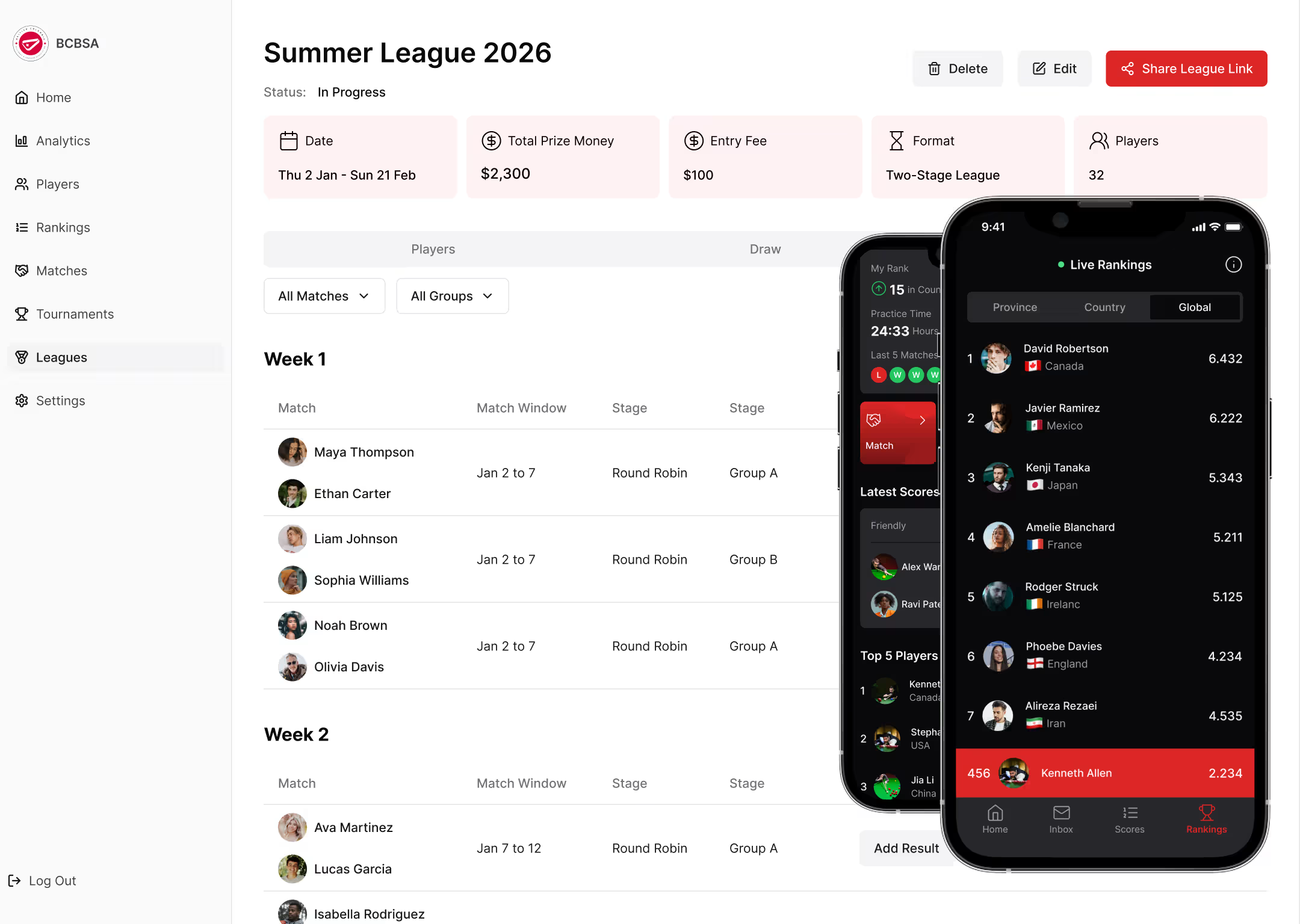
Purpose built snooker club management software removes most of that admin. CuePal is designed to help clubs manage seasonal leagues with ease. Whether it is a weekly series or a long term championship, it keeps every match organised, recorded and ranked.
What CuePal handles for you
- Fixture scheduling: schedule fixtures for the season instead of building the list by hand.
- Result tracking: match results are logged so the league history stays complete.
- Club rankings: CuePal automatically ranks players based on verified results and performance trends, creating a transparent and motivating environment for members.
- Player mobile app: players can see live results, personal stats and upcoming matches on iOS and Android.
- App notifications: communicate with members directly through the app.
Fees and promotion
On the Silver and Gold plans, online payments let you collect league entry fees before the season starts, and email marketing tools help you promote the next season to your members.
Choosing a plan for your league calendar
Based on the CuePal pricing page:
- Free: $0 with up to 10 members. Leagues are not included, but you can run 1 tournament per month and 1 open play per week.
- Silver: $45 per month or $490 per year, up to 20 members and 1 league per quarter, plus online payments and email marketing.
- Gold: $95 per month or $995 per year, unlimited members and unlimited leagues, plus analytics for retention, engagement, churned players and club performance.
A club running one league each season fits the Silver plan well. If you want several divisions running side by side, Gold removes the limits. For a broader look at the market, see our comparison of the top software solutions for billiard and snooker clubs.
Tips for a league that lasts more than one season
- Keep the first season short: 8 to 10 weeks is enough to build the habit without fatigue.
- Celebrate milestones: highlight the top of the table, the highest break and the most improved player.
- Use promotion and relegation: moving players between divisions keeps every match meaningful.
- Collect feedback: ask players what to change before you open the next season.
- Announce the next season early: open entries before the final week so momentum carries over.
A great league is not the one with the fanciest trophy. It is the one where every player knows when they play, trusts the table and cannot wait for next season.
Conclusion
When you run a snooker league well, you create a weekly rhythm that fills tables, builds friendships and keeps members loyal. Choose a format that suits your field, publish clear rules, keep results and standings accurate, and let software take care of fixtures, tracking and rankings.
Ready to launch your next season? Create your club on CuePal for free, or book a demo to see how league management works for your club.
Similar Articles
Join The Biggest Snooker Community
Discover events, meet players, and level up your game.