
.png)
How to Run a Snooker Tournament with Automatic Brackets
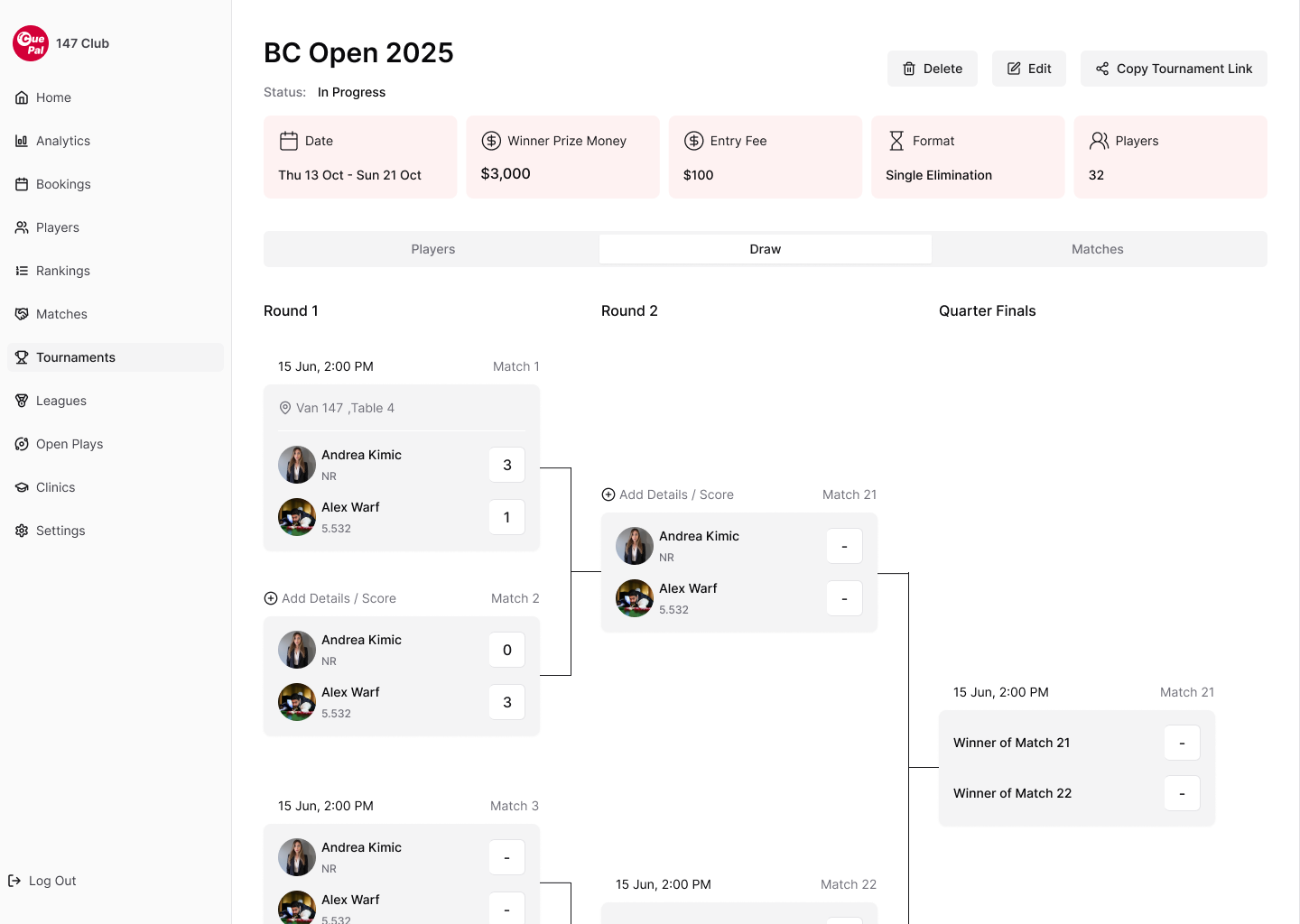
Every club owner knows the feeling. The entry list is on a sheet of paper behind the bar, the draw is being rewritten for the third time because two players dropped out, and a group chat is filling up with people asking who they play next. If you want to run a snooker tournament that players rave about instead of complain about, the fix is not more effort. It is a better system.
This guide walks through how to plan, draw and deliver a club tournament from start to finish, which format to pick for your members, and how automatic brackets remove the admin that usually eats your whole evening.
Why club tournaments are worth the effort
A well organised tournament is one of the most reliable ways to fill tables on a quiet night. It gives casual members a reason to come in, gives your regulars something to prepare for, and turns a room of individual players into a community.
Tournaments also feed everything else in your club:
- Table time: matches keep tables occupied for hours, and players often stay on to practise or watch.
- Bar and food: spectators and knocked out players tend to stick around.
- Retention: members who compete regularly have a reason to keep their membership active.
- New members: an open event is an easy first step for players who have never visited your club.
If you want to see how events fit into a wider growth plan, our article on the 4 pillars of growth for billiard and snooker clubs covers the bigger picture.
Choosing the right snooker tournament format
The format you choose shapes how long the event takes, how many matches each player gets, and how competitive it feels. Most clubs rely on two formats.
Knockout
In a knockout (single elimination) event, the loser of each match goes out and the winner moves to the next round. It is fast, dramatic and easy for spectators to follow.
- Best for: larger fields, one day or one evening events, and handicap competitions.
- Watch out for: half the field only plays one match, so weaker players may feel it was not worth the entry.
- Tip: use seeding so your strongest players do not meet in the first round.
Round robin
In a round robin, every player in a group plays every other player, and the table decides who progresses or wins. It guarantees plenty of frames for everyone.
- Best for: smaller groups, social events and players who want as much match practice as possible.
- Watch out for: the number of matches grows quickly. A group of 8 players means 28 matches.
- Tip: split a larger entry into several groups, then send the top finishers into a knockout stage.
Quick format checklist
- How many tables can you give the event, and for how long?
- How many entries do you realistically expect?
- Do players care more about playing lots of frames, or about a quick, exciting finish?
- What match length (best of 3, best of 5) fits your time window?
Planning your event step by step
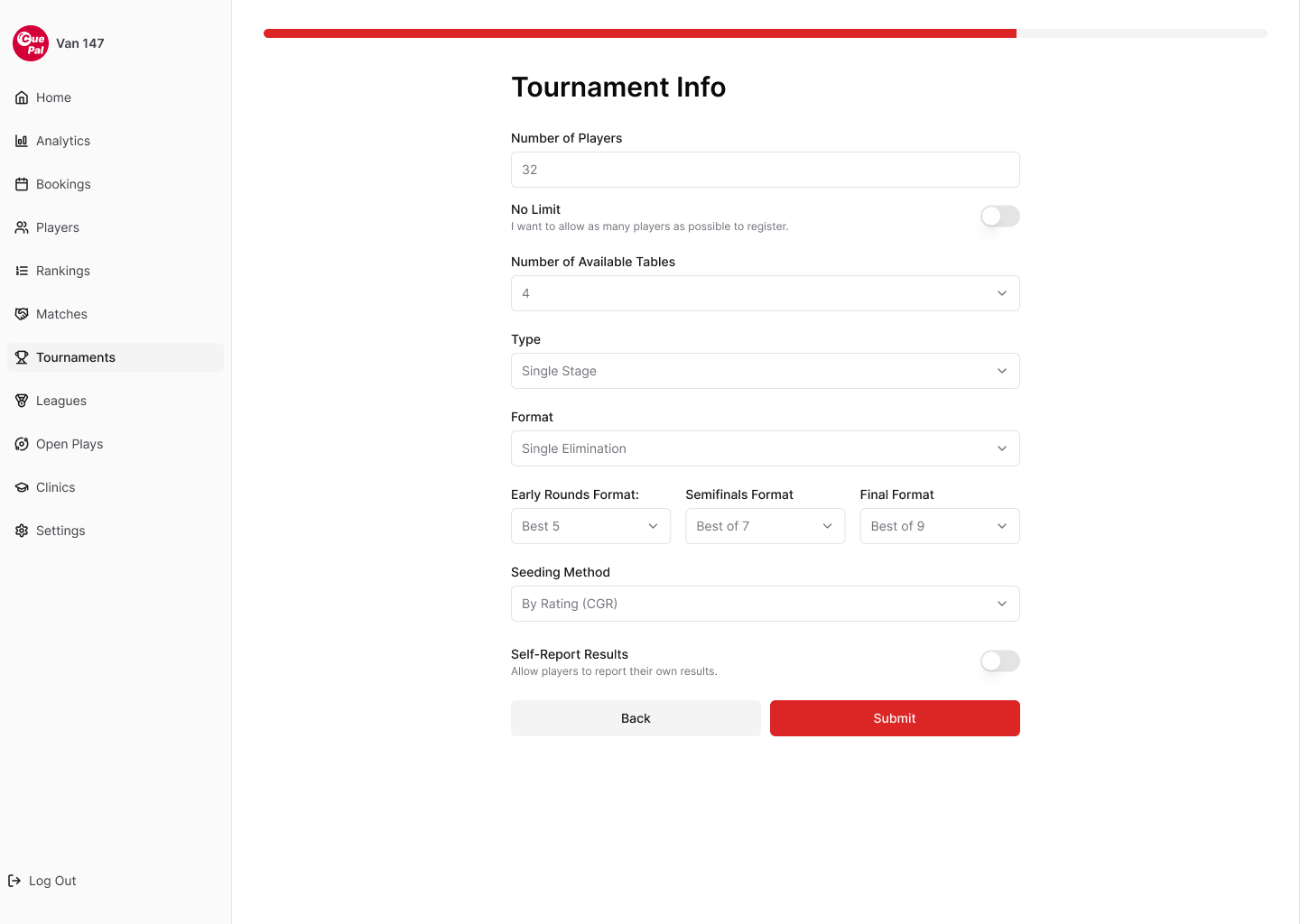
1. Set the basics
Decide on the date, start time, format, match length, entry fee, prize structure and entry cap. Write down the rules you will apply on the night, including what happens if a player is late. Being clear upfront prevents most disputes.
2. Open entries early
Give players at least two weeks' notice. Share the event with your members by email, in the club and on social media. Collecting entries and fees in advance protects you from no shows and makes planning far easier.
3. Seed the field
Seeding spreads your strongest players across the draw so the later rounds are the most competitive. The fairest way to seed is by current form, which is why a ranking based on real results is so valuable. If you do not have one yet, read how live snooker rankings for amateurs work.
4. Make the draw
This is where paper systems start to hurt. Byes need to be placed correctly when the entry is not a neat 16 or 32, seeds need to land in the right halves, and the whole thing has to be redone if someone withdraws.
5. Run the matches
On the day, your job is to keep tables moving. Call matches as soon as tables free up, record every result straight away, and keep players informed about who they play next and where.
6. Wrap up properly
Announce the winners, share photos, thank everyone who took part and tell them when the next event is. The follow up message is often what turns a one off entrant into a regular.
The hidden cost of spreadsheets and group chats
Plenty of clubs run tournaments with a spreadsheet and a messaging group, and it works until it does not. The common problems look like this:
- Manual draws that take ages and are easy to get wrong.
- Lost results scribbled on scorecards that never make it into the sheet.
- Constant questions from players asking about their next match.
- No history, so you cannot seed fairly next time or show players how they are improving.
- Entry fees chased in cash on the night.
Each of these costs you time, and time on a tournament night is exactly what you do not have. It also makes the event feel less professional than it really is.
How automatic brackets make it easier to run a snooker tournament
Dedicated snooker club management software takes the repetitive parts of the job off your plate. CuePal lets clubs organise tournaments in minutes in either knockout or round robin formats, and it manages brackets automatically.
What that means in practice
- Automatic brackets: the draw is generated for you and updates as results come in, so there is no redrawing by hand.
- Player seeding: seed your field so the best players are spread across the draw.
- Match result logging: results are recorded as matches finish, building a reliable history.
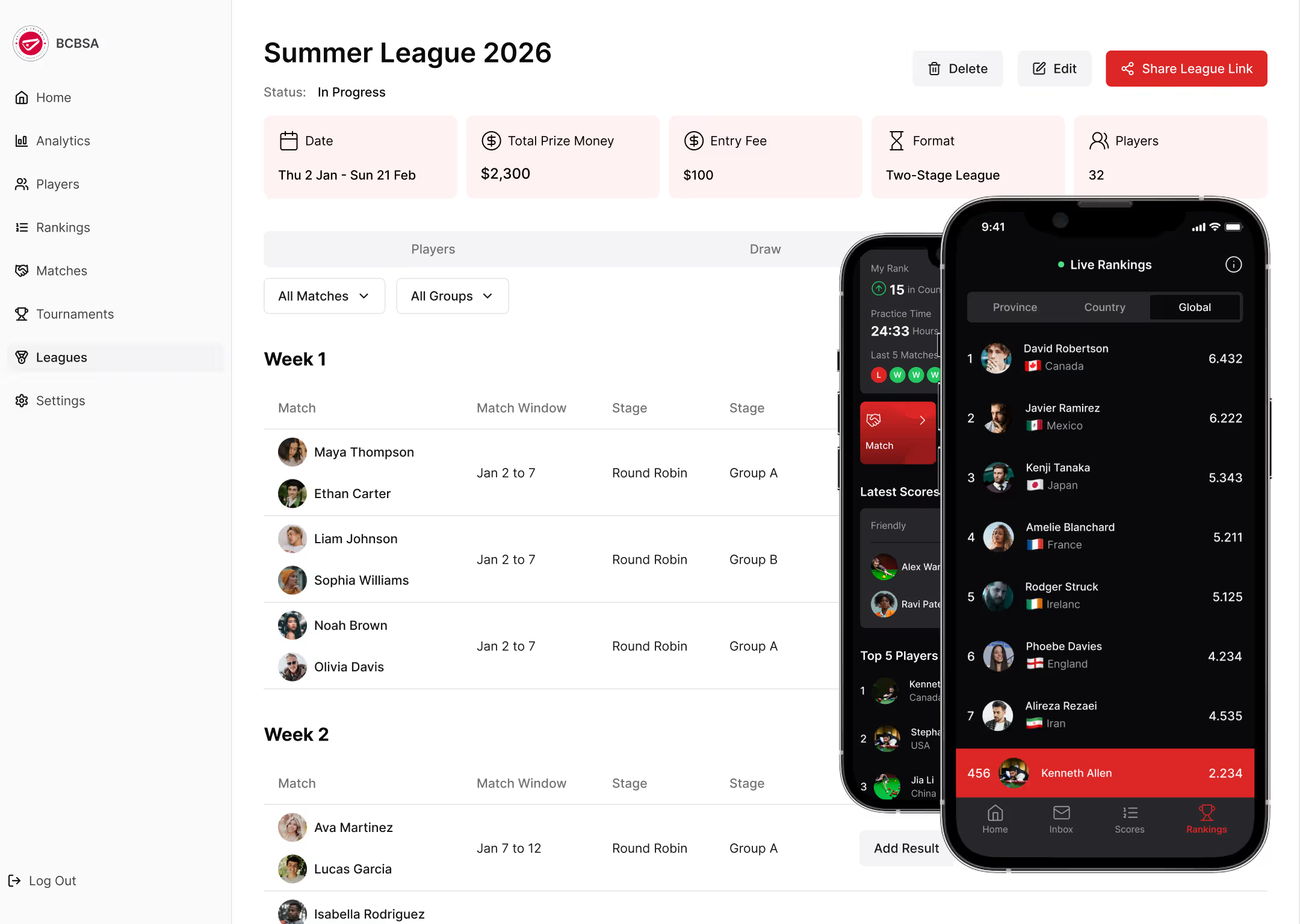
- Club rankings: CuePal automatically ranks players based on verified results, giving you a fair basis for seeding the next event.
- Player mobile app: members can follow events on the CuePal app for iOS and Android.
Entries, payments and promotion in one place
On the Silver and Gold plans, CuePal adds online booking and online payments, so players can sign up and pay before the night. The platform also includes email marketing tools to promote your events to members.
Which plan fits your tournament calendar
According to the CuePal pricing page:
- Free: $0, up to 10 members, 1 tournament per month and 1 open play per week.
- Silver: $45 per month or $490 per year, up to 20 members, 2 tournaments per month, 2 open plays per week, 1 league per quarter and 1 clinic per month, plus booking and payments.
- Gold: $95 per month or $995 per year, unlimited members and unlimited events, plus the full analytics suite covering retention, engagement, churned players and club performance.
If you run a tournament every week, Gold removes the limits entirely. If you host a monthly competition for a small group, the Free plan is a sensible place to start. For a wider comparison of the options on the market, see our guide to the top software solutions for billiard and snooker clubs.
Tips for a tournament night that runs on time
- Build in buffer: assume some matches will overrun and plan the schedule accordingly.
- Keep matches short in early rounds: best of 3 early, longer matches for the final.
- Have a clear late policy: for example, a frame forfeited after 15 minutes.
- Assign a tournament director: one person makes the calls, so there is no debate at the tables.
- Record results immediately: never rely on remembering them later.
- Plan the next event before this one ends: announce the date while players are still in the room.
The best club tournaments feel effortless to players because the organiser has removed the friction behind the scenes.
Conclusion
Learning how to run a snooker tournament well is one of the most valuable skills a club owner can have. Pick the right format for your members, plan early, seed fairly and let software handle the draw, the results and the rankings. You will spend less time on admin and more time building the atmosphere that keeps players coming back.
Ready to run your next event without the paperwork? Create your club on CuePal for free, or book a demo and we will show you how automatic brackets work for your club.
Similar Articles


Join The Biggest Snooker Community
Discover events, meet players, and level up your game.